Politics
“Get in a Boat” — U.S. Defence Secretary Pete Hegseth Urges Europe to Act Directly on Hormuz Security, Says Crisis Is ‘More Their Fight’
“Get in a Boat” — U.S. Defence Secretary Pete Hegseth Urges Europe to Act Directly on Hormuz Security, Says Crisis Is ‘More Their Fight’
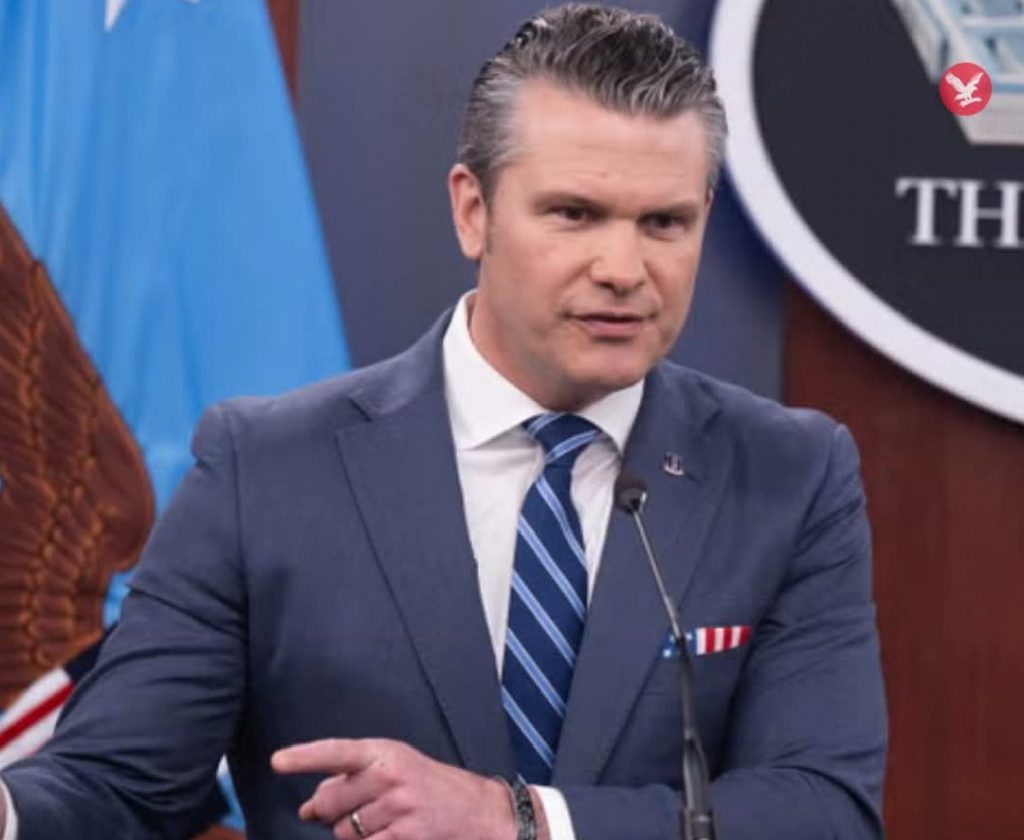

U.S. Defence Secretary Pete Hegseth. Image Credit: US/Facebook Page.
In a blunt and unusually sharp message that has stirred international debate, U.S. Defence Secretary Pete Hegseth has called on European allies to move beyond what he described as “fancy conferences” on the security of the Strait of Hormuz and instead take direct operational responsibility.
His remarks, delivered with striking candour, come amid renewed global concerns over stability in one of the world’s most critical energy corridors.
“Get in a boat” — a message that cuts through diplomacy
Speaking on Europe’s role in securing maritime routes in the Gulf region, Hegseth said:
“Europe must end ‘fancy conferences’ about Hormuz and ‘get in a boat’.”
He further added a statement that has since become the centre of diplomatic discussion:
“This is much more their fight than ours.”
The comments reflect growing tension within NATO circles over burden-sharing, particularly in high-risk maritime zones where global trade and energy supplies remain vulnerable.
Why the Strait of Hormuz matters
The Strait of Hormuz is one of the most strategically important shipping lanes in the world, linking major oil and gas producers in the Middle East to global markets. Any disruption in the area has historically triggered spikes in global oil prices and heightened geopolitical tensions.
While the United States has traditionally played a leading naval security role in the region, European nations have also participated in monitoring missions and diplomatic initiatives aimed at preventing escalation.
Hegseth’s remarks suggest a push for Europe to assume a more active, boots-on-the-water presence rather than relying heavily on coordinated talks and multilateral meetings.
Growing pressure over global security responsibilities
The statement arrives at a time when questions over NATO burden-sharing and global military commitments are increasingly under scrutiny. Analysts say Hegseth’s tone reflects a broader strategic debate in Washington about reallocating defence responsibilities and encouraging allies to take on greater operational roles.
While some observers interpret the comments as a call for stronger European naval engagement, others view the phrasing as unusually direct, potentially signalling frustration over slow-moving diplomatic processes.
Mixed reactions across diplomatic and public spaces
The comments quickly gained traction online, sparking widespread discussion among policymakers, defence analysts, and social media users.
Supporters of the stance argue that Europe, being heavily dependent on Middle Eastern energy routes, should take a more hands-on role in securing them. Critics, however, see the remarks as dismissive of established diplomatic frameworks and cooperative security mechanisms.
On social media, reactions have been sharply divided — with some users praising the “straight-talking approach,” while others questioned whether such language could strain transatlantic relations at a sensitive geopolitical moment.
A message that signals shifting expectations
Beyond the headline-grabbing phrasing, the underlying message points to a possible shift in expectations within Western alliances: less reliance on conference-room diplomacy and more emphasis on direct operational presence in strategic hotspots.
Whether Europe responds to the call for a more active maritime role remains to be seen. What is clear, however, is that the conversation around the Strait of Hormuz — and who should shoulder its security burden — is once again at the centre of global attention.
Closing note
Hegseth’s remarks have added fresh urgency to an already complex geopolitical debate. As tensions and strategic interests converge in the Gulf region, the question now being asked in diplomatic circles is not just about policy — but about who is willing to physically take responsibility in one of the world’s most sensitive waterways.



Join our growing community and never miss important updates:
Telegram
Email Subscription


Explore diverse and engaging content across our platform:
Aviation | Capital Market | Energy | Advocacy | Africa | Asia | Europe | World |
Arts | Beauty | Education | Cartoons | Columnists | Features | Fashion |
Football | Industry | Insurance | Maritime | Travel & Tourism | Weekend |
Interviews | Gadgets | Law | Change of Name

We are committed to delivering timely, credible, and impactful news stories that inform, educate, and inspire society.
Reach a wider audience by promoting your brand, business, or services on our platform.

Your privacy matters to us. We ensure your data is protected and handled responsibly.

Your email address will not be published. Required fields are marked *
For:
Event Coverage
Public Relations (PR)
Story/Article Publication
Media Partnerships


Stay updated with the latest news on health, politics, business, sports, and trending stories.

Our mission is to deliver exceptional journalism by presenting balanced, accurate, and impactful stories while promoting positivity in society.
We remain committed to holding leadership accountable and protecting the principles of press freedom and free speech without compromise.
By supporting our platform, you contribute to ensuring that individuals and institutions have access to credible and reliable information for national development.

Stay informed with trending topics including:
Breaking News | Politics | Health | Education | Environment | Lifestyle | Leadership | Religion | Technology | AI

Lagos, Abuja, Rivers, Kano, Delta, Oyo, Kaduna, Enugu, and international regions like the U.S., UK, Europe, Asia, Middle East, and Africa.

Facebook | Twitter (X) | Instagram | WhatsApp | Telegram | LinkedIn | Pinterest | Reddit
© 2025 NEWZSPY
All Rights Reserved.
Share this content: