National
House of Representatives Advances Bill to Regulate Suspension of Lawmakers, Expedite Pre-Election Petition Process.
House of Representatives Advances Bill to Regulate Suspension of Lawmakers, Expedite Pre-Election Petition Process.
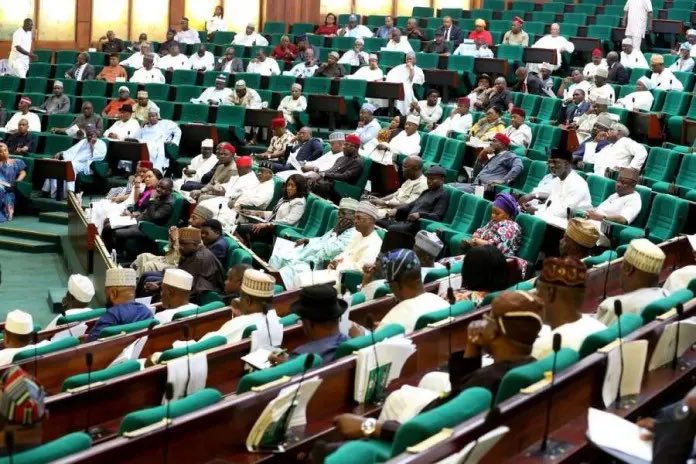

In a significant legislative move, the House of Representatives has passed for second reading a bill aimed at streamlining the process of suspending lawmakers from legislative duties, reducing the prolonged timeframe for resolving pre-election petition matters, and establishing dedicated pre-election tribunals.
The bill, which seeks to enhance fairness and efficiency in legislative and electoral proceedings, was debated on the floor of the House, with lawmakers expressing the need to uphold due process while ensuring that pre-election disputes do not drag on indefinitely, potentially undermining the integrity of the electoral process.
Key Provisions of the Bill
Regulation of Lawmaker Suspension:
The bill proposes clear guidelines for the suspension of members of the National Assembly, ensuring that such actions follow due process and are not arbitrarily enforced. This provision aims to prevent politically motivated suspensions while safeguarding the integrity of legislative proceedings.
Expedited Resolution of Pre-Election Petitions:
Under the current system, pre-election matters often experience delays, leading to uncertainty in the electoral process. The proposed legislation seeks to shorten the timeframe within which courts must determine pre-election disputes, ensuring that candidates and political parties receive timely rulings before the general elections.
Establishment of Pre-Election Tribunals:
To further enhance efficiency, the bill calls for the creation of specialized pre-election tribunals that will handle election-related disputes before the main elections. These tribunals will be mandated to swiftly adjudicate issues such as party primaries, candidate qualifications, and internal party conflicts.
Legislators Debate the Bill
During the debate, proponents of the bill argued that regulating the suspension of lawmakers would prevent undue political interference and ensure that elected representatives can carry out their duties without fear of arbitrary removal.
Similarly, supporters emphasized that the prolonged legal battles over pre-election matters have, in the past, disrupted Nigeria’s electoral process. By establishing pre-election tribunals, the bill aims to provide a structured and expedited mechanism for resolving such disputes.
Some lawmakers, however, raised concerns about the implementation and funding of the proposed tribunals, urging the National Assembly to ensure that the bill is thoroughly scrutinized to avoid potential legal loopholes.
What’s Next?
With the bill passing its second reading, it will now be referred to the relevant House committee for further deliberations and possible amendments. If successfully passed through the third reading and approved by the Senate, it will be sent to the President for assent before becoming law.
Observers believe that if enacted, this legislation could significantly enhance legislative accountability and improve the efficiency of Nigeria’s electoral dispute resolution process, ultimately strengthening democracy in the country.
Credit: X/Imran Muhammed, Newzspy.

Share This.
Leave a Reply:
Your email address will not be published. Required fields are marked *
At the launch of Drop Innovations (a ridesharing app and web platform for car sales), held at Lagos Intercontinental Hotel, Victoria Island, Lagos:
For , Event Coverage, PR, Story/Article Publication & Other Media Services Pls., Send Email To: newzspy25@gmail.com.
Please Kindly Visit Our New Online News Web www.newzspy.ng To Read More Latest, Health, Politics, Business, Sports, Happenings And Interesting News.
MISSION STATEMENT
To provide an exceptional news, balance our stories and shine a positive light on our society. As a media platform, we hold leadership accountable and will not trade the right to press freedom and free speech for a piece of cake. If you like what we do, and are ready to uphold solutions journalism, kindly donate to the Ripples Nigeria cause.
Your support would help to ensure that citizens and institutions continue to have free access to credible and reliable information for societal development.
Tags:
#Abia, #Adamawa, #AkwaIbom, #Algeria, #Anambra, #Angola,#Argentina,#AsHeTurns59, #Australia, #Bangkok, #Bauchi, #Bayelsa #Benue #Borno, #Belgium, #Bharian, #Bolivia, #Brazil, #Bulgaria, #Canada #Chile, #China, #Congo, #Croatia, #CrossRiver, #Cuba, #Delta, #Dubai, #Ebonyi, #Edo, #Ekiti, #Enugu, #Europe, #Finland, #Georgia, #Ghana, #Gombe, #Greece, #Guinea-Bissau, #Hungary, #Imo, #India, #Indonesia, #Israel, #Italy, #Jamaica, #Japan, #Jigawa, #Kaduna, #Kano, #Katsina, #Kebbi, #Kogi, #Kuwait, #Kwara, #Lagos, #Laos, #Lesotho, #Liberia, #Libya, #Malaysia, #Mauritania, #Namibia, #Nasarawa, #NewZealand, #Niger, #Norway, #Ogun, #Oman, #Ondo, #Osun, #Oyo, #Pakistan, #Plateau, #Portugal, #Qatar, #Rivers, #Russia, #SaudiArabia, #Sokoto, #SouthAfrica, #StateOfPalestine, #Switzerland, #Taraba, #Thailand,#TinubuCelebratesCustomsBossAdeniyi, #Togo, #Turkey, #U.S, #Yobe, #Zamfara @jidesanwoolu @drobafemihamzat @Lamataonline@gbenga_omo@gboyegaakosile @BSaluHundeyin @Mr_JAGs #LASG #AGreaterLagosRising @NigeriaGov @NGRSenate@HouseNGR @TradeInvestNG. #Flip #Filminthepark.
Share this content: