EDUCATION
FG Proposes Scrapping of JSS, SSS to Introduce 12-Year Basic Education Model. √√√ Newzspy.
FG Proposes Scrapping of JSS, SSS to Introduce 12-Year Basic Education Model. √√√ Newzspy.
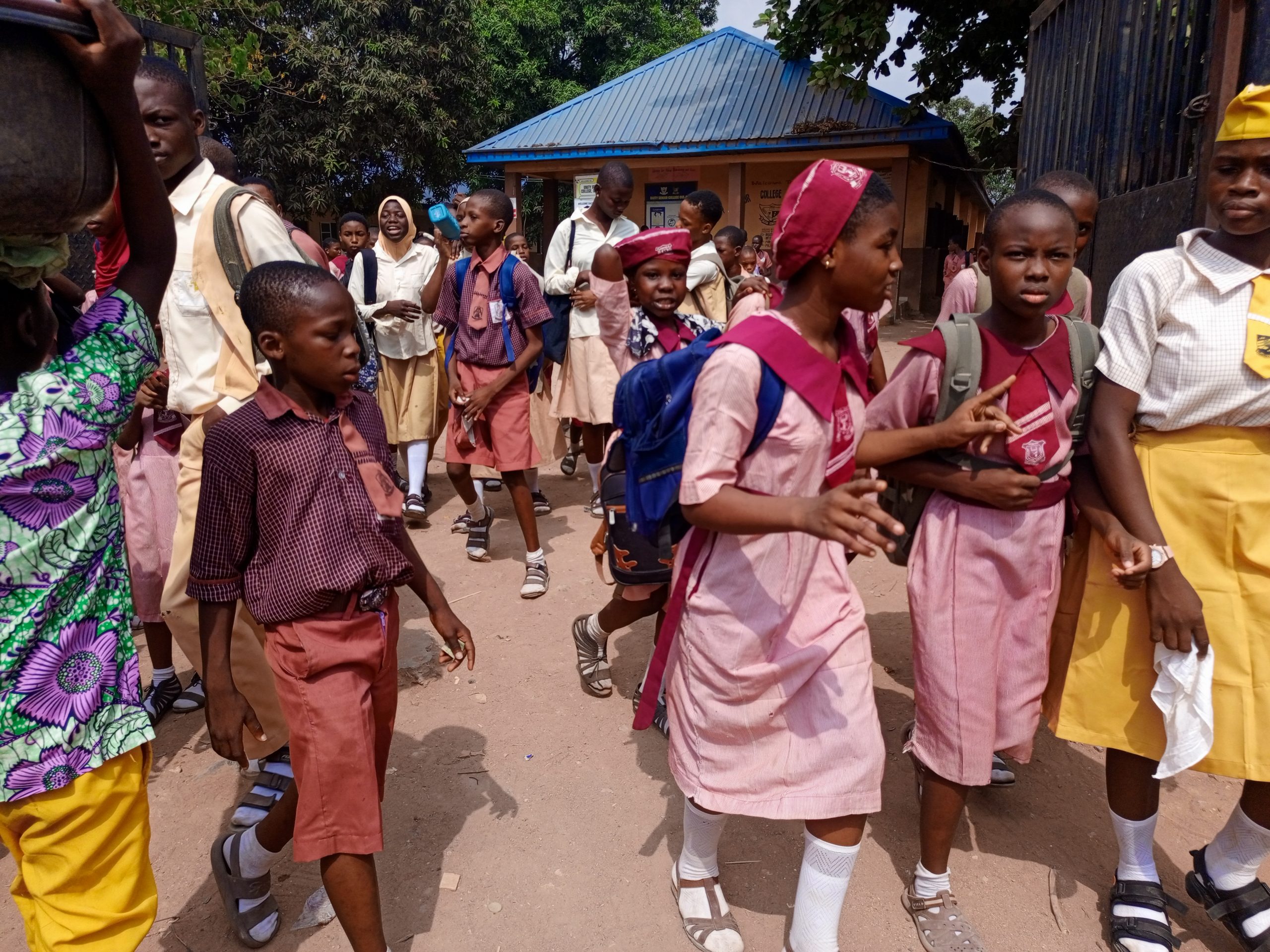

In a major policy shift aimed at reforming Nigeria’s education system, the Federal Government has proposed scrapping the current junior and senior secondary school structure and replacing it with a continuous 12-year basic education model. This was revealed by the Minister of Education, Dr. Tunji Alausa, during the 2025 extraordinary meeting of the National Council on Education (NCE) held in Abuja.
The meeting, which brought together education commissioners from the 36 states and the Federal Capital Territory (FCT), as well as representatives from government agencies, educational institutions, and development partners, served as a platform to discuss and deliberate on significant changes to Nigeria’s education system.
From 6-3-3-4 to 12-4: A Shift in Nigeria’s Educational Structure
Nigeria currently operates the 6-3-3-4 education system, where students undergo:
6 years of primary education
3 years of junior secondary school (JSS)
3 years of senior secondary school (SSS)
4 years of tertiary education (for most university degrees)
This model has been in place for decades but has faced several challenges, including high dropout rates, financial burdens on parents, and systemic inefficiencies.
Dr. Alausa, while presenting the proposal, advocated for transitioning to a 12-4 system, which would eliminate the distinction between JSS and SSS and create a seamless 12-year basic education cycle. Under this model, students would remain in an uninterrupted learning environment from primary education until they turn 16, at which point they could transition to tertiary institutions or vocational training.
Why the Shift? The Rationale Behind the Proposal
The Minister outlined several reasons why the government is pushing for this change:
Reducing Dropout Rates:
Many students drop out of school due to financial constraints or systemic barriers between JSS and SSS. By eliminating this division, students will have a smoother transition through their education without facing structural interruptions.
Raising the Minimum Entry Age for Tertiary Institutions:
The government aims to set 16 years as the minimum age for university admission, ensuring that students are mature enough to handle tertiary education and the workforce that follows.
Aligning with Global Standards:
Many developed countries have continuous basic education systems that provide a well-rounded education up to the age of 16 or 18, after which students choose between university, vocational training, or direct employment.
Early Vocational Training and Skill Development:
The new system will incorporate practical skill acquisition and vocational training from an earlier stage, preparing students for both higher education and employment opportunities.
Economic and Social Development:
By equipping young people with relevant skills, the government hopes to enhance economic productivity, reduce child labor, and create a more competitive workforce.
Implementation Strategies: How the Policy Will Be Executed
To successfully implement the 12-year basic education model, the government will adopt several strategies, including:
Policy Reforms: Updating the national education policy to reflect the new structure.
Infrastructure Expansion: Building more classrooms, laboratories, and vocational centers to accommodate the extended basic education cycle.
Teacher Training: Enhancing teacher education programs to prepare them for the new system.
Curriculum Standardization: Developing a uniform curriculum that integrates academic learning with vocational and technical skills.
Reactions and Next Steps
While the proposal has been welcomed by some education experts as a step toward a more structured and effective education system, others have expressed concerns about funding, teacher readiness, and implementation logistics.
The government is currently seeking approval from the National Council on Education (NCE) to implement this model, after which detailed execution plans will be rolled out across the country.
If successfully adopted, this policy could mark a transformational shift in Nigeria’s education system, potentially shaping the future of millions of students for better career prospects and national development.
Stay tuned for further updates as the proposal moves through the approval and implementation stages.
What are your thoughts on this new education model? Share your views in the comments!
Credit: Vanguard, Newzspy
Share this content:
Like this content:
Send your press invite, news, press releases/articles to newzspy25@gmail.com Also, follow us on Twitter @newzspy and on Facebook on facebook.com/newzspy or call the Publisher/Photojournalist on 08068030592.
At Newzspy we are dedicated to delivering high-quality news and information to our readers. We are dedicated to providing our readers with high-quality news and information daily.
Leave a Reply:
Your email address will not be published. Required fields are marked *
At the launch of Drop Innovations (a ridesharing app and web platform for car sales), held at Lagos Intercontinental Hotel, Victoria Island, Lagos:
For , Event Coverage, PR, Story/Article Publication & Other Media Services Pls., Send Email To: newzspy25@gmail.com.
Please Kindly Visit Our New Online News Web www.newzspy.ng To Read More Latest, Health, Politics, Business, Sports, Happenings And Interesting News.
MISSION STATEMENT
To provide an exceptional news, balance our stories and shine a positive light on our society.
As a media platform, we hold leadership accountable and will not trade the right to press freedom and free speech for a piece of cake. If you like what we do, and are ready to uphold solutions journalism, kindly donate to the Ripples Nigeria cause.
Your support would help to ensure that citizens and institutions continue to have free access to credible and reliable information for societal development.
Categories: Arts And Culture, BIRTHDAY, Business, CSR, CULTURE, Education, EMPOWERMENT, ENLIGHTENMENT, Environment, General News, Headlines, Health, Humanitarian, Judiciary, LEADERSHIP, LIFESTYLE, PERSONALITY, Politics, Property, Technology, TRANSFORMATION, YOUTH DEVELOPMENT Tags: #Abia, #Adamawa, #AkwaIbom, #Algeria, #Anambra, #Angola, #Argentina, #AsHeTurns59, #Australia, #Bangkok, #Bauchi, #Bayelsa #Benue #Borno, #Belgium, #Bharian, #Bolivia, #Brazil, #Bulgaria, #Canada #Chile, #China, #Congo, #Croatia, #CrossRiver, #Cuba, #Delta, #Dubai, #Ebonyi, #Edo, #Ekiti, #Enugu, #Europe, #Finland, #Georgia, #Ghana, #Gombe, #Greece, #Guinea-Bissau, #Hungary, #Imo, #India, #Indonesia, #Israel, #Italy, #Jamaica, #Japan, #Jigawa, #Kaduna, #Kano, #Katsina, #Kebbi, #Kogi, #Kuwait, #Kwara, #Lagos, #Laos, #Lesotho, #Liberia, #Libya, #Malaysia, #Mauritania, #Namibia, #Nasarawa, #NewZealand, #Niger, #Norway, #Ogun, #Oman, #Ondo, #Osun, #Oyo, #Pakistan, #Plateau, #Portugal, #Qatar, #Rivers, #Russia, #SaudiArabia, #Sokoto, #SouthAfrica, #StateOfPalestine, #Switzerland, #Taraba, #Thailand,#TinubuCelebratesCustomsBossAdeniyi, #Togo, #Turkey, #U.S, #Yobe, #Zamfara@jidesanwoolu @drobafemihamzat @Lamataonline@gbenga_omo@gboyegaakosile @BSaluHundeyin @Mr_JAGs #LASG #AGreaterLagosRising @NigeriaGov @NGRSenate @HouseNGR @TradeInvestNG. #Flip #Filminthepark.
Share this content: